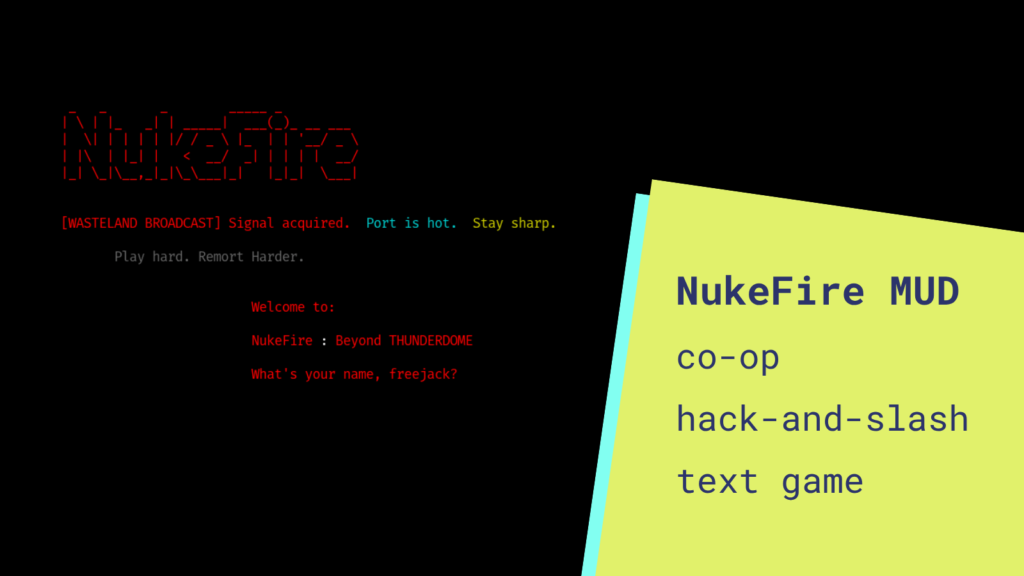
NukeFire is a multiplayer, hack-and-slash text game (MUD) built by two longtime friends, Mo and Hiro. They both cut their teeth on Tdome, a long-running ’90s MUD set in a post-apocalyptic wasteland.
When Tdome finally went dark in 2023, the pair took what they loved about it and built something new: a welcoming place where friends can hang out, fight weird monsters together, and “watch the numbers go up.”
It’s a game that revels in the mayhem without the grief and drama of its predecessor.
In today’s interview, Mo and Hiro talk about their pop-culture-inspired game, how they work together to get things done, and what keeps players coming back for more.
Meet Mo and Hiro, longtime friends and co-creators
Mo lives in Honolulu, Hawaii, and has been a commercial and residential painting contractor for over 30 years. Outside of work and NukeFire, he’s into photography, audiobooks, and spending time with his wife.
Hiro lives in Minneapolis, Minnesota. He spent years in big tech before shifting to part-time work developing prototypes for startups. In his free time, he volunteers at a local high school helping students build robots for FIRST Robotics competitions.
Despite their wildly different backgrounds, they’ve been collaborating on MUD projects for over twenty years and counting.
Mo compared their partnership to a two-part epoxy:
“One half isn’t worth much on its own,” he said, “but together it sets hard and holds everything together.”
For his part, he writes classes, designs mechanics, and creates the world. He sees his most important job as protecting the “feel” of NukeFire – making the game “challenging, rewarding, and full of surprises, while keeping it fair and stable.”
Hiro handles the sysadmin side: the Discord integrations, database work, live web updates, and keeping the server running. “Mostly I do the infrastructure stuff so Mo can do his magic of world creation.”
“I’ve got a ravenous appetite for learning, and I use that to keep pushing the game forward.” — Mo
From Thunderdome to NukeFire
Both Mo and Hiro found MUDs in college in the mid-’90s, and both ended up on the same game: ThunderDome.
“A buddy and I found a Telnet address scribbled in the margin of a random book,” said Mo. That address led to Tdome I, which eventually became Tdome: Rise of the Freejacks.
Hiro landed there around the same time, coming from a background of D&D and BattleTech. For him, MUDing was “a magical extension of those experiences,” and before he knew it, he was hooked. He even taught himself how to use Linux so he could share a single-modem connection between his PC and his roommate’s Amiga.
As for ThunderDome, well… it was a complicated game with many sides.
On its own website, Tdome described itself as “a game without preconceived ideas of what your character should be. It’s a multi-genre, multi-player, text-based world where your imagination defines your role.”
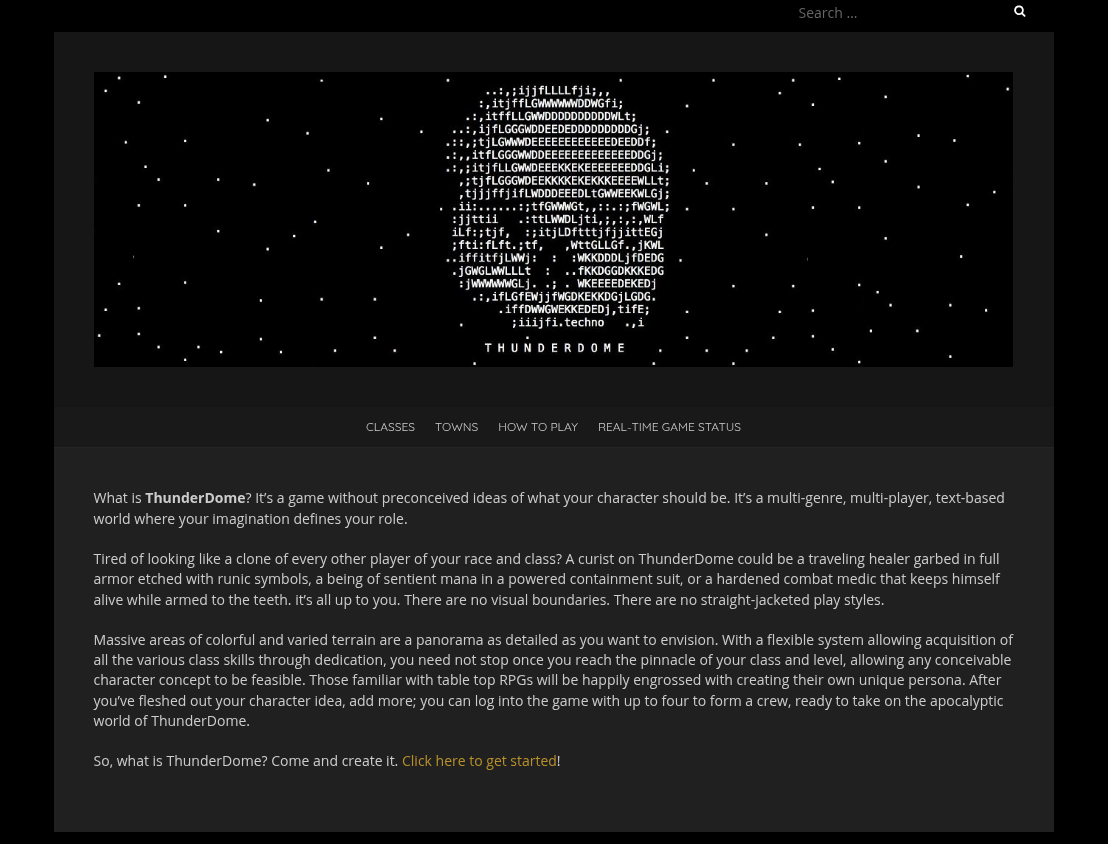
Tdome homepage text:
What is ThunderDome? It’s a game without preconceived ideas of what your character should be. It’s a multi-genre, multi-player, text-based world where your imagination defines your role.
Tired of looking like a clone of every other player of your race and class? A curist on ThunderDome could be a traveling healer garbed in full armor etched with runic symbols, a being of sentient mana in a powered containment suit, or a hardened combat medic that keeps himself alive while armed to the teeth. it’s all up to you. There are no visual boundaries. There are no straight-jacketed play styles.
Massive areas of colorful and varied terrain are a panorama as detailed as you want to envision. With a flexible system allowing acquisition of all the various class skills through dedication, you need not stop once you reach the pinnacle of your class and level, allowing any conceivable character concept to be feasible. Those familiar with table top RPGs will be happily engrossed with creating their own unique persona. After you’ve fleshed out your character idea, add more; you can log into the game with up to four to form a crew, ready to take on the apocalyptic world of ThunderDome.
But that world was also harsh.
You lost Constitution every time you died. Drop below 3 Con and your character was gone forever. Weapons broke. Rent was expensive. Death traps were everywhere. PKers could loot your corpse or dump your gear.
And despite all that, it maintained a playerbase for many years.
As one player wrote in a Reddit eulogy for Tdome:
“Through all of this, the game kept players. That should tell you the quality of the world, the quality of the combat, and the quality of the code.”
Even so, Tdome shut down permanently around September 2023 with no announcement. Though, Mo had seen the writing on the wall before that.
“I played there up until about 5 or 6 years ago, when I realized I probably wasn’t going to get a real chance to code or build for that game,” he recalled. “That’s when I decided to write my own version.”
In fact, Mo and Hiro had already designed an area for Tdome roughly twenty years earlier – one that never made it into the game.
When Mo told Hiro he wanted to build something new, one of their early goals was to finally get that area into production and share it with people.
They both wanted something they could pour their best ideas into and shape over time – somewhere they would be free to try new ideas and develop their skills.
NukeFire was the answer.
What is NukeFire?
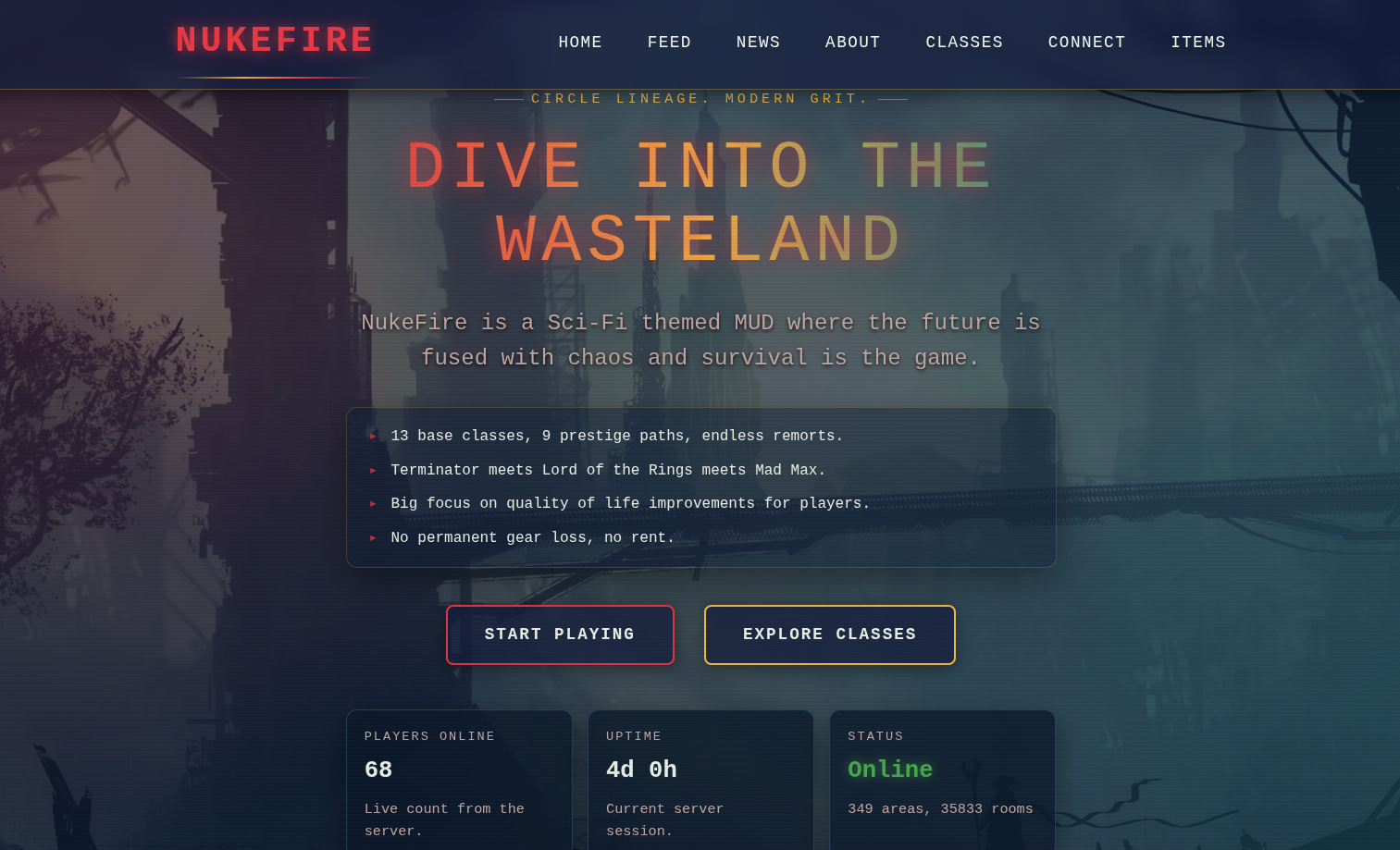
In Mo’s own words, NukeFire is “an old-school text MUD – a multiplayer RPG you play through Telnet, where you explore zones, fight monsters, chase gear, and build a character alongside other people.”
At its core, it’s a PvE hack-and-slash game designed around cooperation.
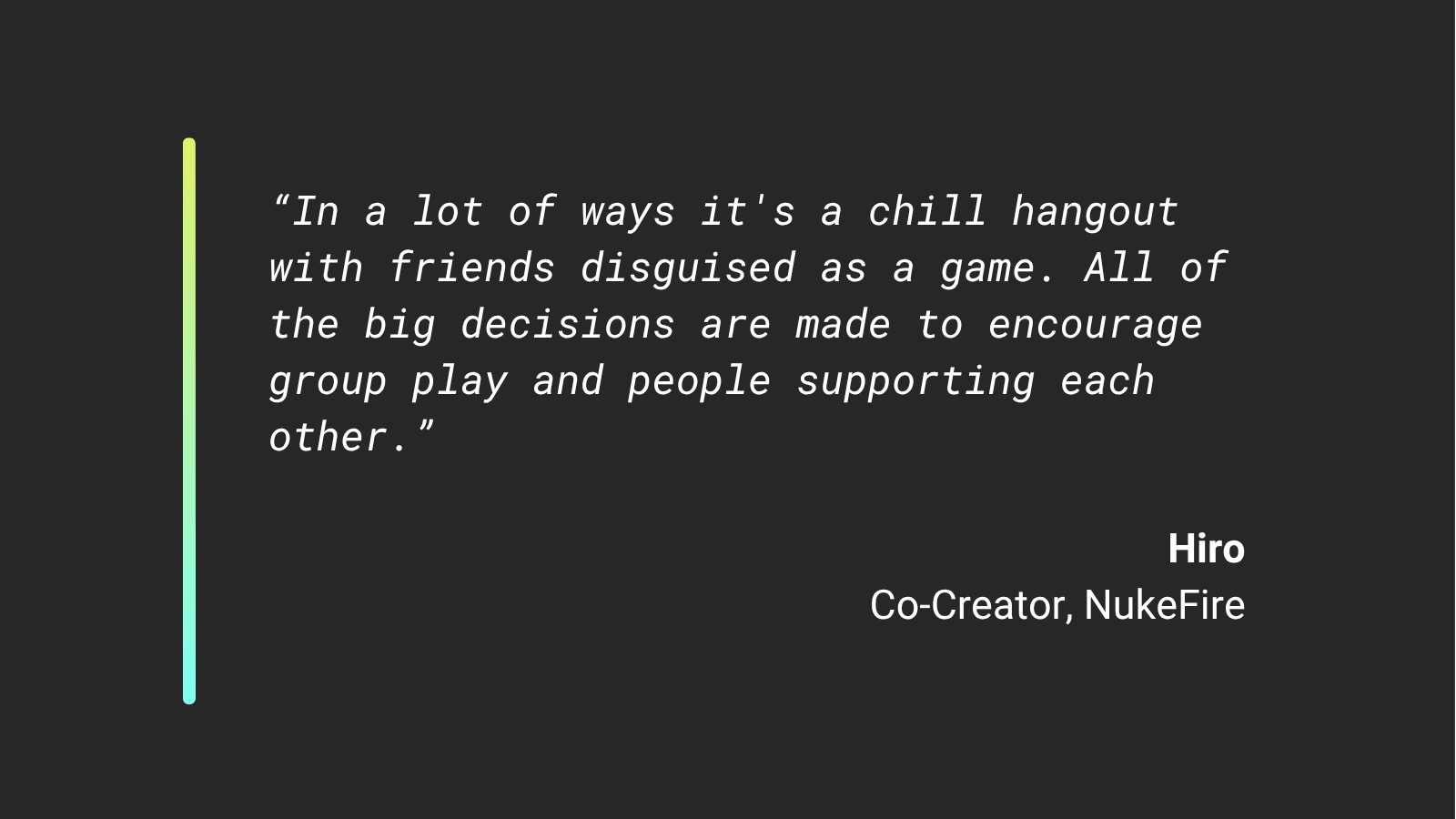
Hiro described it as “a chill hangout with friends disguised as a game.”
For example, there’s no PvP. No clans. Nothing that splits the playerbase into competing factions or forces them into conflict.
Instead, the game encourages group play and mutual support. Even experienced players still need a group to take on the toughest content, said Mo.
As for the the content itself – it seems to draw inspiration from just about everywhere.
“It’s a strange grab-bag of cultural references that doesn’t take itself too seriously and somehow works together,” said Hiro.
Just take a look at the notes from a recent content update, which includes:
- a 2,400-room Skyrim area
- a dungeon inspired by Wizardry I
- a RoboCop zone wired into NukeFire’s cyberpunk city of Tek Angeles
- a Hellraiser area where you can fight your way to Pinhead
- a 500-room Warhammer 40k zone
- (and more)
All told, Mo has already tripled the amount of world content that Tdome ever had, and NukeFire has only been officially open since April 17th, 2025.
Oh, and that area he and Hiro designed 20+ years ago? In NukeFire, it’s called C.O.G. – Continuation of Government and was inspired by the Deathlands book series.
The remort system is the game
What sets NukeFire apart mechanically is its remort system, according to Mo. In fact, he went so far as to say “the remort and class system is the game.”
In the context of MUDs, remorting usually means resetting your character back to level 1 after hitting max level, with some kind of bonus or unlock that makes it worthwhile.
In NukeFire, it means your character steadily becomes something different from where it started. You unlock prestige classes as you go, and the costs scale up so you never get bored resting on your laurels.
Currently, there are 13 base classes and 9 prestige classes, including one called Kaiju, which is unlocked by Mutant. Some prestige classes require 50 remorts in a single class (e.g. Wolfman, unlocked by Ranger), while others require 25 remorts in two separate classes (e.g. Heretic, unlocked by Curist + Knight).
At 100 remorts, you receive a custom Legendary item that keeps evolving every 100 remorts after that, with game-wide announcements for each milestone – “because it should feel earned,” said Mo.
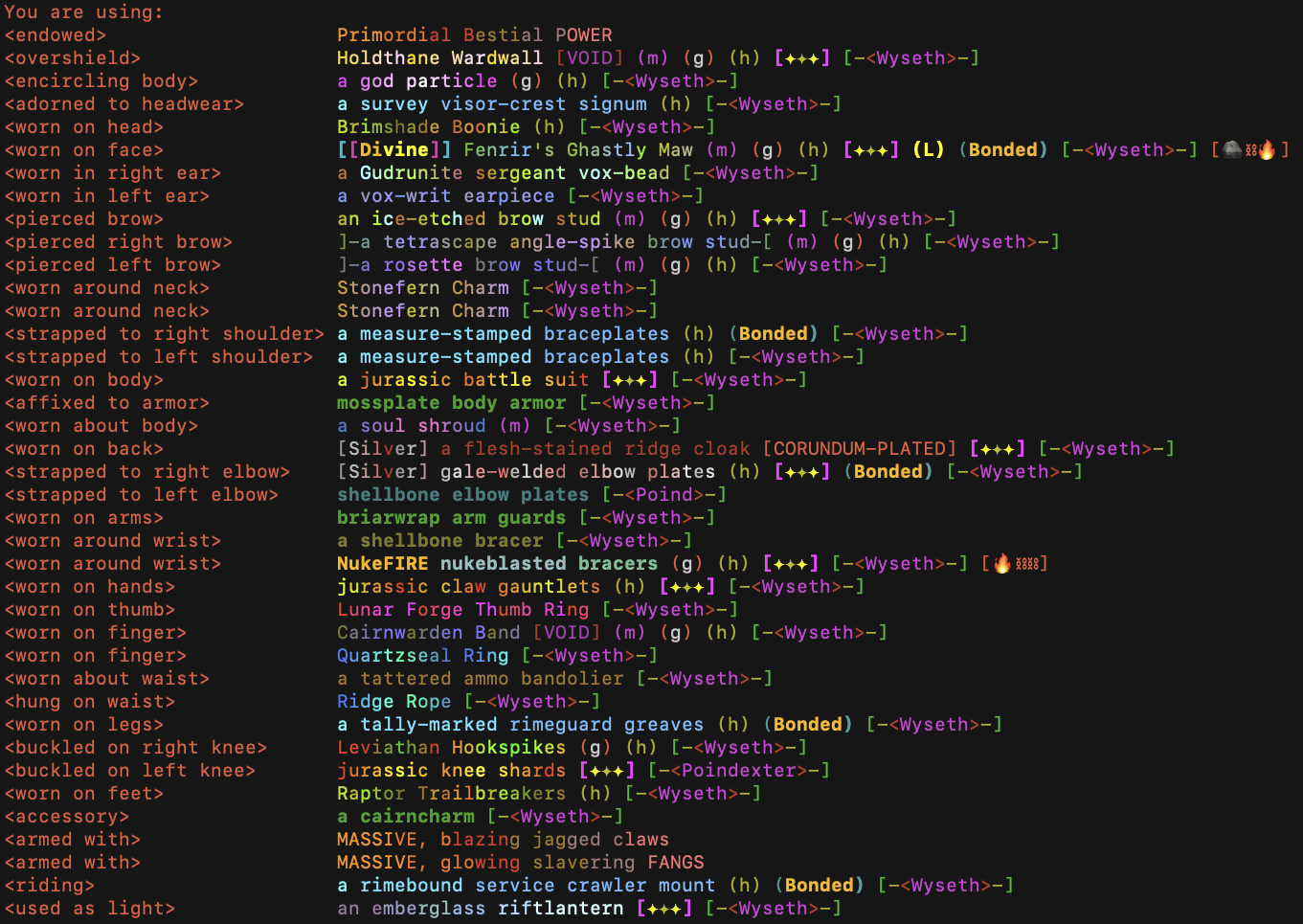
But a single remort doesn’t take as long as you might think.
Mo shared an example: a dedicated crew of four new players recently managed to hit 50 remorts each in just two weeks. That means they’re already halfway toward their first legendary milestone.
Also, each class has its own flavor in combat, with unique skills, custom messaging, and a distinct deathblow.
If Tdome’s pitch was creative freedom and its reality was punishing difficulty, you could say NukeFire delivers on the original promise by stripping away the friction and drama.
What’s left are the combat, the world, and the progression – with a nice quality-of-life philosophy woven through the whole experience.
As the Tdome eulogist put it:
“Gone is rent, gone is con lost, gone is age, gone is sleeping, gone are permanent dt’s. Everything that sucked about Tdome is now gone and it only focuses on the fun aspects while keeping the dangerous vibe.”
Quality of life improvements in NukeFire
A great example of a NukeFire-unique mechanic that removes friction is the GPS system.
The GPS system lets you lock onto a destination anywhere in the world with just a quick search and a numeric code.
You can gps find <target> to pull up matches, then gps set <code> to lock one in. From there, the GPS gives you a “next step” direction and updates the route every time you move.
If you’re in a hurry, you can also run remaining to attempt to sprint the route.
Here’s an example Mo shared:
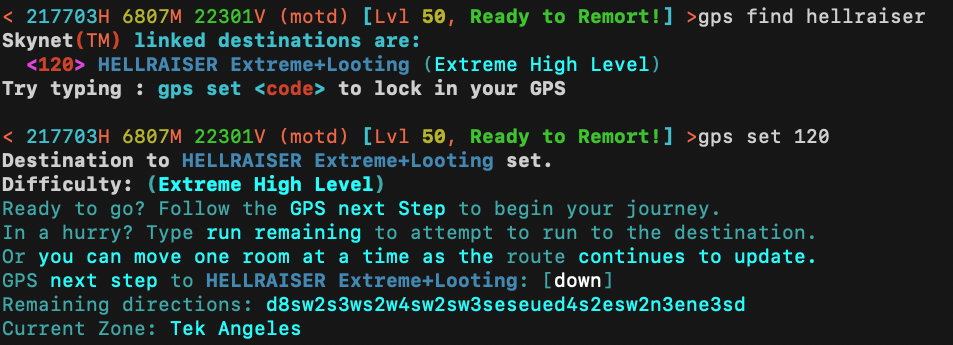
In this case, the new “hellraiser” area is the target. The match prints 120 as the code, so that gets set, and then the inline help text explains the rest: follow the GPS next step [down] or “run remaining” to get there quickly.
It also shows the remaining directions in shorthand (e.g. d8sw for down once, followed by southwest 8 times) and the current zone (Tek Angeles). Pretty neat!
Another QoL thing I like about NukeFire: the ability to compare your equipment with possible upgrades in your inventory – automatically.
With toggle autocompare on, when you check your inventory, you can see at a glance which items are better, about even, or worse than what you currently have equipped.
It even shows which items are incompatible or can’t be used because you don’t meet the prereqs:
You are carrying:
↑ better ↔ toss-up ↓ worse ! anti-class ! min remorts x invalid
↔ gremlin war boots
x a scroll of identify
x a heavy scroll
↑ a brightly glowing jar (g)
↑ an ethereal crystal
↑ a sketched butterfly (g)
x the Lockaid
! a clipboard
↓ a bright green gremlin vest
! calloused knuckles
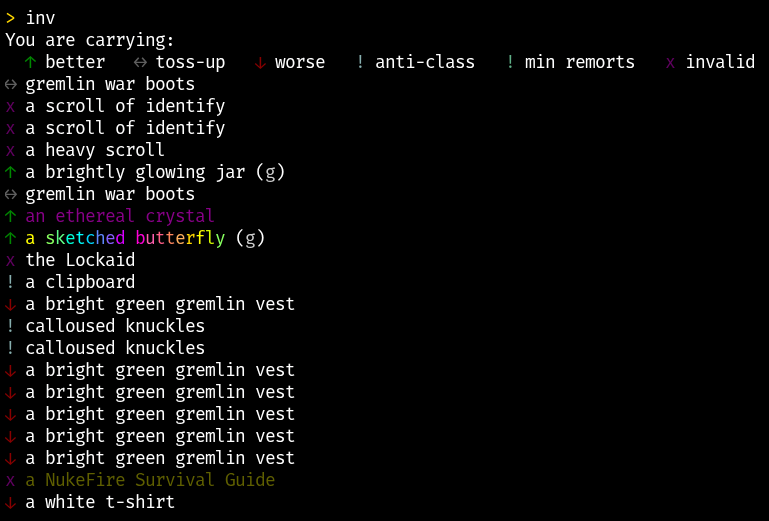
There’s no guesswork, no trying things on and taking them off, and no spreadsheets needed to track stats.
Mo made it extremely easy for players to see when they’ve got an upgrade worth putting on. Kudos!
NukeFire was built from a gutted 2021 version of tbaMUD – a descendant of the CircleMUD/DikuMUD lineage. Mo added somewhere between 200,000 and 300,000 lines of new code on top of it, and some of Tdome’s original world content carried forward in reworked form. The result is a game that Mo says has the “soul” of Tdome while being “really and truly a different, more complete MUD in all areas.”
About half of NukeFire’s current players are returning Tdome veterans.
Teamwork that makes the dream work
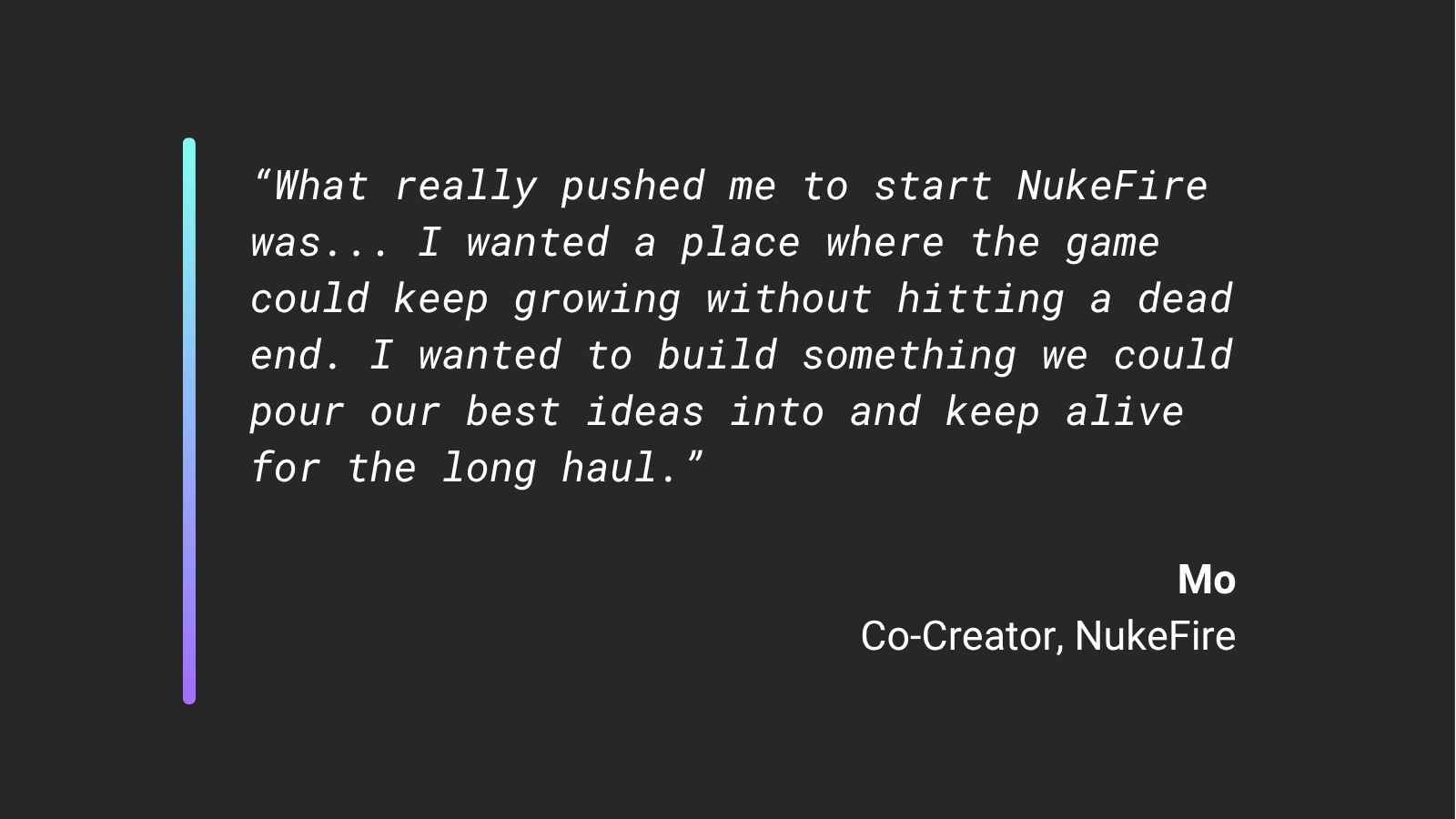
Earlier, I described how Mo and Hiro fill complementary roles. But what challenges them and keeps them motivated while they’re working?
Hiro has an affinity for roguelike design and seems to weave that into the game wherever he can. For example, when NukeFire introduced grenades that could be thrown into adjacent rooms, Hiro made sure the mobs could throw them right back.
“I tend to make things ‘hard’ on the players, in that if they can do something I like the mobs to be able to do it too,” he said.
His favorite part of the job is when players @mention him on Discord with a screenshot of something terrible happening to their party. 😂
But the biggest ongoing challenge, and the one that keeps Mo busiest, is staying ahead of the players.
“The players play! A lot!” Hiro said.
Mo agreed: “Keeping ahead of these rabid players with meaningful, tasteful content is a challenge, but it’s also the fun part. The way I deal with it is by always having the next rung ready: a new zone, a new progression hook, a new set of upgrades, or a new twist on an old system – something that feels earned and fits the world, not just ‘more stuff.'”
Surprisingly, neither Hiro nor Mo had had coded in C before this project. They both learned through it, and they both credit AI coding tools as a resource for helping them get this far.
“I think it’s easy to say ‘AI is bad,'” Hiro noted, “but in some ways it’s been a very patient teacher for me.”
Lessons learned: trust and feedback
Both Hiro and Mo have strong opinions shaped by experience – some from NukeFire, some carried forward from their years on Tdome.
Here’s some of their advice:
“Don’t bestow coding/imp/imm rights to anyone,” said Hiro. “Have building done on a separate port and have a process to incorporate that into the main game. An imm that is mis-aligned with your objectives can do untold damage to your delicate ecosystem.”
“One of my biggest lessons has been learning how to really listen to players at face value, even if I give them a hard time about it in-game,” said Mo.
Players will ask for things in ways that sometimes sound self-serving, he said, but underneath that there’s often a real problem or a real opportunity.
At the same time, he’s careful not to give players everything they ask for – advice that sounds a lot like Niymiae’s from Lumen et Umbra. (Great minds, as they say!)
Mo’s solution is to filter players’ feedback through the game’s identity.
“Hear them out, protect the balance, and still be willing to steal the best ideas and turn them into ‘NukeFire’ versions,” he said.
Both recommended the r/MUD subreddit and its associated Discord server for anyone thinking about building a MUD.
“There are some really great people there with just an absurd amount of knowledge on every subject,” Mo added.
Hiro stressed the importance of outreach: “you also have to advertise a bit to find the right players for your world.”
On the accessibility front, NukeFire currently offers options to reduce combat spam, and Mo is open about wanting to do more. Screen reader users looking for a hack-and-slash MUD to try are more than welcome to give the game a try. Any feedback would be appreciated.
The latest updates and what’s coming next
NukeFire has seen an uptick in new player activity over the past few months, which has shaped a lot of the work Mo has been doing.
Recently, he spent time smoothing out the early game with a friendlier upgrade path, better onboarding flow, and new starter zones so that brand-new players have a chance to find their footing before the world opens up.
Mo doesn’t work from a formal roadmap, though.
“Most of what I build gets triggered by inspiration and opportunity, and I follow the momentum when something clicks,” he said.
His ongoing focus is quality-of-life work: modernizing the classic utility commands and adding new ones where they make the game easier to play without watering it down.
Hiro, meanwhile, recently wrapped up a website revamp and is spending his free time coaching high schoolers through robotics season.
For even more recent updates, check out the website’s News page. Since I started this article, at least 15 changes have come out, each one improving or expanding some aspect of the game.
One example Mo’s excited about: socketable equipment. Players can now explore mines for socket jewels to enhance their gear even further. 🔥
Thanks and acknowledgments
When asked who they’d like to thank, both Hiro and Mo pointed to each other and to their players.
“Mo is the glue that holds this all together,” Hiro said. “And I’d really like to shout out to our players who are the chillest group of guys and gals around. We’ll crash the game 5x in 10 minutes bringing in a new feature like injectable drugs and they just roll with it.”
Mo returned the compliment. “Hiro makes it possible for the game to run the way it does, and the players are the reason it keeps growing. They show up, they push the limits, they give feedback, and they keep the world alive.”
NukeFire exists because Mo had the vision and Hiro knew how to execute it – but it continues to grow because they’ve built enough together to trust each other’s instincts.
Mo can focus on the world knowing Hiro has infrastructure covered; Hiro can push systems in weird directions knowing Mo will make sure it still feels like NukeFire.
They make a pretty good team, don’t they?
A big thank you to Hiro and Mo for taking the time to share the NukeFire story – and to our mutual friend Opie for the introduction!
If you’re looking for a hack-and-slash MUD with a cooperative heart and a world that doesn’t take itself too seriously, definitely check it out: visit nukefire.org to learn more and come say hi in the Discord.



Leave a Reply to Mo Cancel reply